
By ANU Library Guide Working Group.

What tools can libraries develop to support transdisciplinary education and research? What are the challenges and requirements to make such tool development happen?
Here we describe a library guide (commonly abbreviated to LibGuide), a tool often developed by individual libraries to showcase their resources on a particular subject and to provide a consistent pedagogical approach to such subject-specific resources.
The library guide that we developed focused on transdisciplinary problem solving and aims to provide introductory materials for students and academic staff across our university (The Australian National University). In particular, it supports the introduction of a university-wide educational program to ensure that all undergraduates develop skills allowing them to work with others to understand and creatively address amorphous and complex problems. The university has formally adopted the “Capability to Employ Discipline-based Knowledge in Transdisciplinary Problem Solving” as an attribute that all undergraduates must acquire through their education.
This educational program, especially the framework underpinning it, has been described previously in an i2Insights contribution: A framework for building transdisciplinary expertise.
The library guide was also structured around this framework, with the core elements being that transdisciplinary problem solving is:
- change-oriented (requiring an understanding of four topics, namely change, decision making, research implementation and unknowns),
- systemic,
- context-based,
- pluralistic,
- interactive (requiring an understanding of three topics, namely teamwork, stakeholder engagement, and communication),
- integrative.
In addition, introductions to transdisciplinarity as a whole were covered by adding “General Resources.”
We recognised that, although books and journals are the mainstay of academic work, some students and academic staff might be more attracted to blogs, videos, and popular articles, so we included such resource types, which are now also commonly incorporated into library holdings. We restricted the resources in any category to 20 or less, seeking to balance the provision of multiple entry points (to allow users from any of the university’s disciplines or fields to find materials they can relate to) with keeping the library guide manageable for users. Journals, however, were an exception to this highly selective process, in that we sought to identify all major relevant journals, largely because there are still relatively few of them.
The structure of the library guide is shown in the screenshot below and it is available at https://libguides.anu.edu.au/transdisciplinary-problem-solving. To the best of our knowledge, this is the first-ever library guide on transdisciplinarity.

Challenges in developing the library guide to transdisciplinary problem solving
In developing the library guide, we had to tackle three major challenges.
- Libraries are designed around disciplines, not transdisciplinarity.
The organisation of libraries matches that of their academic institutions, and, despite the growing interest in transdisciplinarity, those institutions are still typically structured around specific disciplines and faculties. This means that library collections, and the categories and catalogues they use, are discipline-based. Furthermore, most librarians in academic institutions specialise in particular discipline- or field-based subjects, which influences the in-depth support and resources they are equipped to provide.This challenge required modification of the usual library-led development of library guides, as well as an expansion of the library’s collection of resources on transdisciplinarity. To get in-depth insights into transdisciplinarity and university-wide coverage of entry-points into transdisicplinarity, we established a unique, and very productive, library–academic partnership. In addition, the library very willingly expanded its collection, adding 23 newly purchased books and 12 new editions or e-books of existing holdings for the 114 books among the 449 resources in the library guide.
- Information science has not yet addressed transdisicplinarity.
The field of information science, which underpins the work of libraries and librarians, has not yet taken much interest in transdisciplinary approaches in academic research and education. Even if there was scope in libraries for subject specialists focused on transdisciplinarity, it would be hard for them to work out where to start and what to concentrate on, which is further exacerbated by the third challenge.
- Transdisciplinarity is a murky concept and is not the only approach relevant to addressing complex societal and environmental problems.
In particular:
- there is no single agreed definition of transdisciplinarity, which is often a hurdle to its acceptance
- there are at least four different ways in which transdisciplinarity manifests, which Julie Thompson Klein (2017, p. 29-30) called trendlines. In brief they are the 1) “systematic integration of knowledge,” 2) the development of “synthetic paradigms” such as general systems and sustainability, 3) “anti-disciplinarity” coupled with a quest for “sociopolitical justice,” and 4) problem solving with multiple disciplines and stakeholders “realized through mutual learning and a recursive approach to integration.” These trendlines are also described in this i2Insights contribution: https://i2insights.org/2024/06/11/defining-inter-and-transdisciplinarity/
- Multiple overlapping approaches have been developed to cross disciplinary boundaries, work with affected communities, and seek to make a difference by engaging policy makers and practitioners, including transdisciplinarity, convergence research, systems thinking, action research, post-normal science and more, as described in this i2Insights contribution: see https://i2insights.org/2020/05/19/finding-integration-and-implementation-expertise/.
In developing the library guide, we mostly concentrated on the problem solving trendline for transdisciplinarity, but also included key references for the other trendlines. In addition, being mindful of other approaches to tackling complex problems, we included their key references, especially from convergence research, systems thinking, action research, and post-normal science.
Conclusion
Our experience highlighted that for transdisciplinary and other approaches to complex societal and environmental problems to become institutionalised and thrive:
- transdisciplinary academics need to more fully recognise the importance of libraries and information science in building transdisciplinary expertise and
- libraries and the field of information science need to pay greater attention to codifying and making accessible transdisciplinary and other approaches to tackling complex problems.
Library–academic partnerships are essential to both.
What’s your experience been of library–academic collaborations around transdisciplinarity and related approaches? Are there other useful tools, apart from library guides, that individual libraries could produce? Have you identified other challenges to producing useful tools or institutionalising transdisciplinary and other approaches to complex societal and environmental problems?
To find out more:
Bammer, G., Foley, T., Chitravas, N., Richardson, A. P., Valter, K., Nabavi, E., Johns-Boast, L., Browne, C., Nurmikko-Fuller, T. and Jones, J. (2025). Advancing transdisciplinarity through library–academic collaboration. Humanities and Social Sciences Communications, 12: article 1326 (Online – open access) (DOI): https://doi.org/10.1057/s41599-025-05492-6 or https://www.nature.com/articles/s41599-025-05492-6.pdf (PDF 794KB).
Reference:
Klein J. T. (2017). Typologies of interdisciplinarity: The boundary work of definition. In, R. Frodeman (editor-in-chief), J. T. Klein (associate editor) and R. C. S. Pacheco (associate editor), The Oxford Handbook of Interdisciplinarity, 2nd Edition, Oxford University Press: Oxford, United Kingdom: 21-34.
Open the combined image of all the authors (JPEG 258KB).
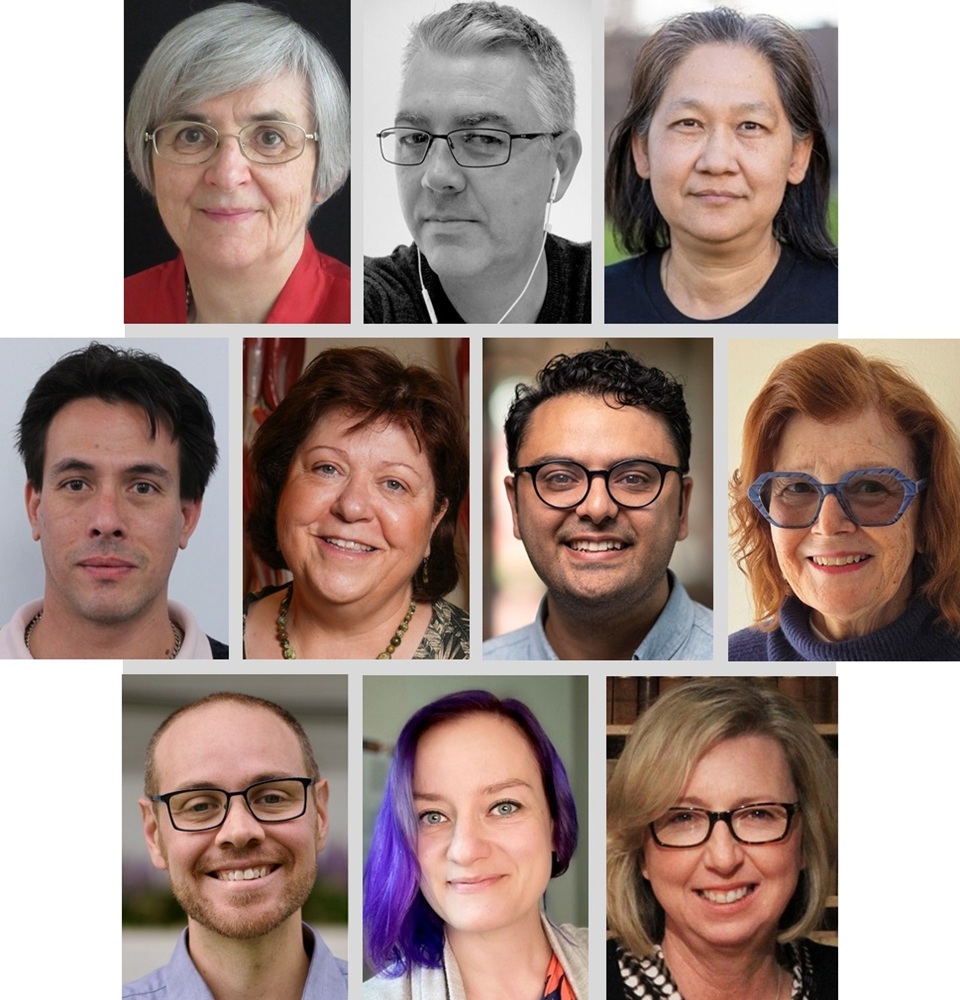
Top row (left to right): Gabriele Bammer, Tom Foley, Nithiwadee Chitravas
Second row (left to right): Alex Richardson, Krisztina Valter, Ehsan Nabavi, Lynette Johns-Boast
Last row (left to right): Chris Browne, Terhi Nurmikko-Fuller, Judith Jones
6 November 2025: the combined image of all authors was updated, as one of the authors had been inadvertently omitted.
Use of Generative Artificial Intelligence (AI) Statement: Generative artificial intelligence was not used in the development of this i2Insights contribution. (For i2Insights policy on generative artificial intelligence please see https://i2insights.org/contributing-to-i2insights/guidelines-for-authors/#artificial-intelligence.)
Biography: Gabriele Bammer PhD is Professor of Integration and Implementation Sciences (i2S) at the National Centre for Epidemiology and Population Health at The Australian National University in Canberra. i2S provides theory and methods for tackling complex societal and environmental problems, especially for developing a more comprehensive understanding in order to generate fresh insights and ideas for action, supporting improved policy and practice responses by government, business and civil society, and effective interactions between disciplinary and stakeholder experts. She is the inaugural President of the Global Alliance for Inter- and Transdisciplinarity.
Biography: Tom Foley GradDip SFHEA is Associate Director, Libraries at The Australian National University in Canberra. His focus is enabling scholarly information services infrastructure to support and enhance research, teaching, and student learning.
Biography: Nithiwadee (Wan) Chitravas MA is Information Access Coordinator (South Asia, Southeast Asia and the Middle East) at the ANU library, The Australian National University in Canberra. She prioritises collaboration and engagement with academics, staff, and students, in order to strengthen the value of the university’s education.
Biography: Alex Richardson PhD is an Associate Professor in Business Information Systems, and Deputy Director (Education) for the Research School of Management at The Australian National University in Canberra. He has a broad range of interests in areas such as user-centred design, business analytics, human-computer interaction, systems modelling, and building decision support capability.
Biography: Krisztina Valter MD PhD is Associate Professor and academic lead of Anatomy, Chair of Medical Science Theme, and Program Convenor of the Bachelor of Health Science Program, ANU School of Medicine and Psychology at The Australian National University in Canberra. Her research focuses on degenerative diseases of the retina, from the molecular and cellular level, to the clinical, and medical and health education. She teaches a successful interdisciplinary course with colleagues at the School of Art and Design on “Exquisite Corpse—Insight into the Human Body.”
Photo credit: Tracy Nearmy
Biography: Ehsan Nabavi PhD is a Senior Lecturer in Technology and Society and Head of the Responsible Innovation Lab at the Australian National Centre for the Public Awareness of Science at The Australian National University in Canberra. His research focuses on responsible computing and modeling, responsible AI (artificial intelligence), and developing responsible thinking and engagement about innovations proposed for wicked problems.
Biography: Lynette Johns-Boast PhD is Adjunct Senior Lecturer in the School of Computing at The Australian National University in Canberra. Her research area is engineering education and curriculum design and development in higher education.
Biography: Chris A. Browne PhD is Associate Professor (Curriculum Transformation) in the Office of the Deputy Vice-Chancellor (Academic) and Academic Convenor of the SoCIETIE (Social, Change, Impact, Engagement, Transformation, Inclusion and Equity) Initiative at the McCusker Institute at The Australian National University in Canberra. His research and teaching focus is on building literacy in systems approaches in transdisciplinary contexts.
Biography: Terhi Nurmikko-Fuller PhD is an associate professor at POLIS: The Centre for Social Policy Research at The Australian National University in Canberra. Her research interests focus on the potential of Linked Open Data to support and diversify scholarship in the Humanities and Social Sciences.
Biography: Judith Jones LLB is an Associate Professor at the ANU Law School at The Australian National University in Canberra. Her core research interest is informing environmental regulation for the assessment of environmental risk. This includes consideration of regulatory theory, comparative administrative law and problems of regulatory design for environmental impact assessment, risk assessment, uncertainty and precautionary approaches.
Thank you ANU LibGuides group for creating and sharing this wonderful resource on transdisciplinary problem solving! Great to have this as an open access living document that includes examples of how each concept could be explored in disciplinary or career contexts. Further developing the much needed partnerships approach, I would suggest that there could be more explicit links between trandisciplinary information resources and career development services. In my experience, students and academics appreciate having informed opportunities, whether digital resources/dialogue spaces or face-to-face interactions, to imagine and research possible career trajectories based on their specific problem-solving contexts. Library and info professionals could be potential facilitators for these kinds of collaborations.
There is emerging research into transdisciplinary information science (info behaviour, info literacy and info experiences), which could help inform library and information services support this kind of research and T&L. I agree that this focus needs much more visibility and recognition (there is a tendency to subsume it under larger mainstream areas). Along with prominent information researchers, I have worked for over a decade to integrate transdisciplinary/sustainability sciences with information research, mainly information experience design, most recently contributing a review on the history of and future pathways to transdisciplinary information literacy, to the upcoming Information Literacy Handbook: Charting the Discipline (Facet, Oct 2025).
Many thanks, Faye. There is a lot in your comment that it would be good to unpack. Your point about career development is important and certainly something to work on. For example, some capstone courses eg in biology or medical science invite a range of people who have made different careers based on those degrees to talk to students and highlighting how they have dealt with transdisciplinary problem solving can be very useful.
It would be great if you could share more about transdisciplinary information science and integrating transdisciplinary/sustainability sciences with information research.
I should also say that while anyone can access the LibGuide and see the resources listed, clicking through to the actual book or journal article etc is unfortunately restricted to ANU staff and students (it’s a restriction libraries have to work under).
Thanks, Gabriele.
The literature review that I mentioned on transdisciplinarity in information literacy (a practice-focused discipline and dimension of Information Science) is in press so I’m unable to share the full text (can be ordered here: https://www.facetpublishing.co.uk/page/detail/the-information-literacy-handbook/?k=9781783306343), but here is a summary of suggestions for practice based on the research findings. Obviously, not all of these will work for every library or university and some are already in place, just offering some ideas to think about more broadly.
Transdisciplinarity requires co-learning and co-creating new knowledge, through:
– Building collaborative capacity i.e. platforms and spaces that enable collaborative knowledge creation, not just information consumption.
– Facilitating metacognitive reflection, collaborative activities, and allowing users to become content creators themselves, moving beyond traditional finder/consumer roles.
– Build digital platforms that can enable students and researchers to co-create content
– Establish makerspaces, collaboration zones, or virtual environments specifically designed for transdisciplinary projects
– Create shared annotation and discussion tools that work across various media types and disciplinary contexts
– Develop repository systems showcasing student-created knowledge alongside traditional scholarly outputs
– Organise research guides around complex issues (such as climate change, health equity, and misinformation) rather than by disciplines or formats
– Implement discovery tools with cross-disciplinary browsing features that reveal unexpected connections
– Curate collections with the intention to bridge the natural sciences, social sciences, arts, and humanities
– Highlight transdisciplinary works and boundary-crossing scholarship prominently in both physical and digital spaces
– Implement “both/and” features in search systems that present diverse perspectives instead of ranking results by a single relevance algorithm
– Create pathways for users to explore information across different life contexts, including academic, workplace, personal, and community
– Build systems that adapt to emerging literacies (such as data, AI, quantum, and algorithmic literacy) while ensuring accessibility
– Establish advisory groups with students, faculty from all disciplines, and community partners as co-designers of library services
– Conduct ethnographic or phenomenographic research to understand how different user groups experience information needs across various contexts
– Partner with non-library units, such as teaching, research offices, careers advisory and community organisations on transdisciplinary initiatives
– Integrate discussions of information ethics into all instructional and consultation activities
– Help users develop critical awareness of their own worldviews and openness to alternative perspectives
– Create frameworks for evaluating the impact and consequences of information before sharing or creating content
– Develop programs that foster collaboration across boundaries, such as interdisciplinary reading groups and problem-solving workshops
– Shift metrics from purely transactional counts to evaluating their impact on knowledge creation and problem-solving
– Assess users’ ability to integrate diverse perspectives and synthesize information across boundaries
– Evaluate how effectively library services promote co-learning and collaborative knowledge creation
– Contribute to information research scholarship by documenting transdisciplinary approaches and outcomes within your local context
– Collaborate with researchers from various disciplines on projects that require information expertise
– Publish in non-library and information science venues to broaden information literacy’s reach and influence
– Investigate how emerging information environments, such as algorithmic and quantum systems, necessitate evolved conceptions of information literacy
– Articulate the value of libraries in enabling transdisciplinary collaboration and addressing complex societal issues
– Position the library as a hub for campus-wide transdisciplinary initiatives
– Advocate for the role of information literacy in preparing socially and environmentally responsible citizens
– Lead institutional discussions on information ethics, quality, and the future of knowledge creation.
Regarding the emerging work on transdiciplinary information science, I raised the point that information science is inherently transdisciplinary with its origins between multiple disciplines (i.e. information literacy concepts emerged from computer science, law and political science, then implemented by library science) so it’s in an ideal placement to facilitate transdisciplinary activities.
Much of the published research in various dimensions of information science (behavioural/experiential schools) over the last 50 years has been inter/transdisciplinary without actually using those terms. More recent work such as transdisciplinary information behaviour (https://publicera.kb.se/ir/article/view/55465) examines this knowledge integration more closely. I am currently expanding my own research since my PhD publications and book on shared understanding for TD early career research, to study the role of information science/knowledge ecology in sustainability sciences.
Fantastic – many thanks!
Gabriele
Very nice piece. Thank you!
Thank you, Burton, for your kind feedback.