

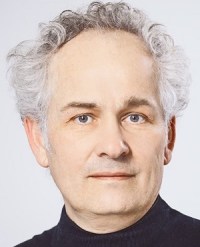
By Tilo Weber

Why should transdisciplinarians, in particular, care about multilingualism and what can be done to embrace it?
From a linguist’s point of view, I suggest that, in a globalized world, a one language policy is not only problematic from the point of view of fair power relations and equal participation opportunities, but it also weakens science as a whole by excluding ideas, perspectives, and arguments from being voiced and heard.
When people communicate, more is at stake than mere exchange of information, coordination of activities, and joint problem solving. Every time we speak, write or engage in other semiotic modes of social interchange, we construe and transform social relationships, we convey, defend, and dispute images of ourselves and others and we establish and negotiate hierarchies of social order and power.
Goal oriented communication cannot succeed without a stable social basis that the participants rely on as trustworthy. Ethnologists, anthropologists, linguists, and others have shown this in the context of innumerable studies following Bronisław Malinowski (1923: 315) who first emphasized the fundamental role of phatic communion thereby referring to “a type of speech in which ties of union are created by a mere exchange of words.”
When I, a linguist, attended my first transdisciplinarity conference in Lüneburg, Germany in November 2017, I was struck by the way transdisciplinary practitioners put this idea in focus. While the ultimate goal of transdisciplinary projects is to collaboratively solve “real world problems,” the communicative construction of social relationships was widely acknowledged as a necessary precondition to every single one of the projects presented.
The practical—in addition to explanatory or descriptive—approach adopted was especially appealing. In many workshops, procedures, tools, and collaboration formats were introduced—and in some cases actually tested—that aim at implementing into the transdisciplinary working process diversity, multiperspectivism, co-creation, legitimacy in participation (to quote but a selection of keywords from various sessions) as pivotal factors.
The conference was an international meeting bringing together participants from all continents for presentations, discussions, and international, multi-cultural projects. And all that presenting, discussing, taking part was done in English. The English language, it seemed, was adopted and taken for granted as the medium of communication available to everybody, be they British, Thai, German or Brazilian.
It is a truism that language is—or can be—used, intentionally and strategically, as an instrument to exert power over others. However, even where there is good will on all parts and effort is invested to create a collaborative environment free of domination, the choice of a working language (or of several working languages) is consequential. Be it intentional or by default, adopting a particular language implies decisions about who will be able to fully participate according to their respective competencies and motivation and who will not.
Those whose mastery of a current working language does not allow them to express their points of view fluently, precisely and with appropriate rhetorical skill or to confidently understand the details of an ongoing discussion, will not—other things being equal—be able to represent their position effectively. They will not be able to make their arguments heard in cases in which they disagree with the group’s common sense and they will not be remembered as those who made the most and most valuable contributions which, in turn, will be consequential for their prestige and social status.
All this applies to projects that unite actors from different scientific, societal, cultural, and economic backgrounds in their collaborative striving to solve “real world” problems. On a meta-level, however, this is also true of the science(s) of collaborative problem solving. Put differently, organizing a conference, exchanging experiences and arguments, generating ideas for new projects, that is doing transdisciplinarity, is not just about the “real world”, it takes place within and is part of the “real world”. What applies to transdisciplinary projects also applies to transdisciplinarity itself. To choose English (or any other language) as the only medium of communication, privileges some participants over others. As a consequence, some collaborators will not be able to bring to bear what they have to contribute in terms of competence, creativity, motivation, etc., thus weakening the collaboration’s outcome.
In a globalized world, monolingual science is restricted science. In contrast, multi- or pluri- lingualism that at first glance may appear to cause confusion and costly communicational complexity can promote scientific (and other) progress by broadening perspectives and allowing more participants to enrich scientific discourse. This is more than wishful thinking. Summarizing his remarks on the Galilean revolution of the 17th century, Winfried Thielmann highlights the positive role of multilingualism and states:
Das scheinbare Skandalon mehrerer europäischer Wissenschaftssprachen ist […] ein Motor der Innovation gewesen. (The apparent stumbling block of several European languages of science was […] a driver of innovation; Thielmann (2009): 21; translation T.W.)
Of course, for many practical purposes, linguae francae are useful and necessary. In many cases, it is handy to use the one language that most of the people in the room more or less master. Multi-language strategies for international and intercultural communication raise a lot of questions, too: What would such strategies look like exactly? How could these strategies be implemented in practice? Wouldn’t the costs of multilingualism in terms of time and effort for translation, need for competent translators, etc., outweigh the potential gains?
Nevertheless it’s worth a try. Imagine allowing participants to use the languages they choose for the purposes of presentation and discussion. And providing resources for translations of written materials and interpreters for oral discussions thus allowing for questions to be asked in one language and answers to be given in another. Imagine doing multilingualism.
What has your experience been? Have you experienced a decrease in the richness of communication through monolingualism? Have you seen successful multilingualism in practice?
References:
Malinowski, B. (1923). The problem of meaning in primitive languages. In, C. K. Ogden and I. A. Richards (eds.). The meaning of meaning. A study of the influence of language upon thought and of the science of symbolism. Kegan Paul, Trench, Tubner & Cohen., London: United Kingdom, 296-336.
Thielmann, W. (2009). Deutsche und englische Wissenschaftssprache im Vergleich: Hinführen – Verknüpfen – Benennen (Wissenschaftskommunikation 3). Synchron, Heidelberg: Germany.
Biography: Tilo Weber PhD is an extraordinary Professor of German Linguistics at Martin-Luther-University Halle-Wittenberg (Germany) and senior lecturer for German Studies at Technical University Liberec (Czech Republic). His research interests lie in the areas of cognitive functional grammar, pragmatics and conversation analysis, intercultural communication, and knowledge communication. He is co-editor of the Transferwissenschaften series published by Peter Lang and co-organizer of the 3rd international Transferwissenschaften colloquy on Wissenskommunikation unter Bedingungen von Mehrsprachigkeit / Znalostní komunikace v podmínkách vícejazyčného prostředí / Knowledge communication under conditions of multilingualism, in Liberec, October 2018, which will be an experiment in multilingualism.
This blog post is based the author’s reflections on the International Transdisciplinarity Conference 2017 at Leuphana University, Luneburg, Germany in September 2017.